
Mark’s fatigue has been worsening for over a year.
At first, he and his partner, Brian, assumed it was stress. A demanding new job. A move. Young children. Just life in general.
But over time, things stopped improving.
Mark is exhausted most days. By evening, he has very little left physically or emotionally. Small tasks feel overwhelming. Noise and stress are harder to tolerate. He misses more work and struggles to participate in family life the way he used to.
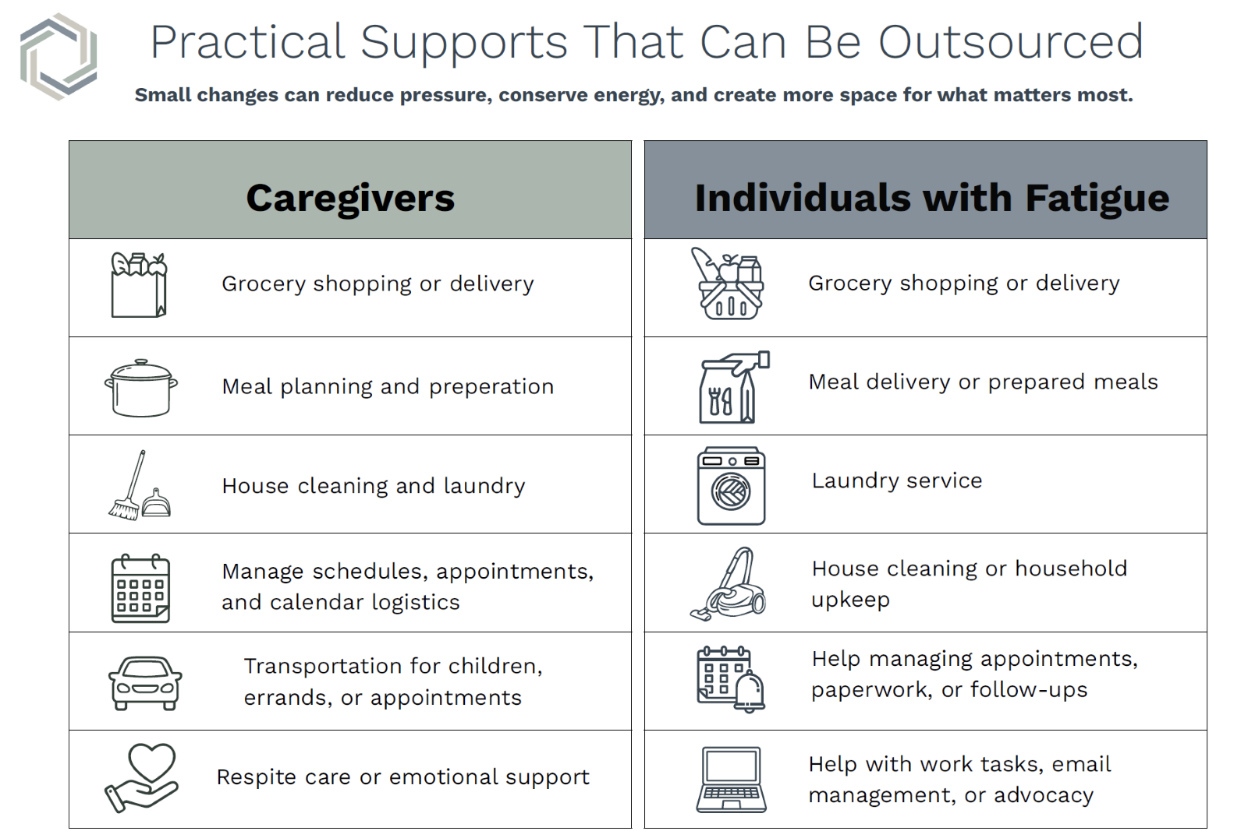
At the same time, Brian has quietly taken on more responsibility at home. He cooks, shops, manages the children’s schedules, drives them to activities, organizes the household, and tries to hold things together while working himself.
And some days, Brian feels frustrated. That frustration does not mean he is unsupportive. It does not mean he loves Mark less. It means the impact of this illness extends beyond Mark alone.
One of the more difficult realities of chronic illness is that two things can be true at the same time:
the person who is unwell is struggling
AND
the people caring for them may be struggling too
Caregivers often find themselves balancing concern, exhaustion, guilt, financial pressure, increased responsibilities, and grief over how much life has changed. Some people feel lonely and overwhelmed. Some feel resentful and then immediately feel shame for feeling resentful.
At the same time, many people living with chronic fatigue carry enormous guilt and shame themselves. They see the extra work their partner, parents, children, or loved ones are taking on. They worry about becoming a burden. They grieve the parts of themselves and their lives that no longer function the way they once did.
The reality is, chronic illness often creates grief in all relationships.
One of the more difficult parts of fatigue-related illness is that much of this happens quietly.
People outside the household may only see brief snapshots. They may see someone attend a dinner, go to work, or look relatively well for a few hours. What they often do not see is the recovery time afterward, the invisible planning behind the scenes, or the redistribution of responsibilities happening within the family to make that functioning possible.
Over time, entire households can begin reorganizing themselves around energy limitations that are difficult for others to fully understand.
Caregivers are often expected to remain endlessly patient and understanding, but they are humans too. They have emotional needs, responsibilities, and exhaustion of their own.
All the while, people living with chronic fatigue are often doing everything they can simply to maintain some degree of daily functioning. This is why support matters not just for the person who is ill, but for the people living alongside the illness as well.
Here are some practical strategies for day-to-day support
Supporting someone with chronic illness is rarely straightforward. It can be exhausting, unfair, confusing, isolating, and deeply loving all at once.
Sometimes the most important thing is recognizing that everyone involved may be carrying more than is visible from the outside.
———